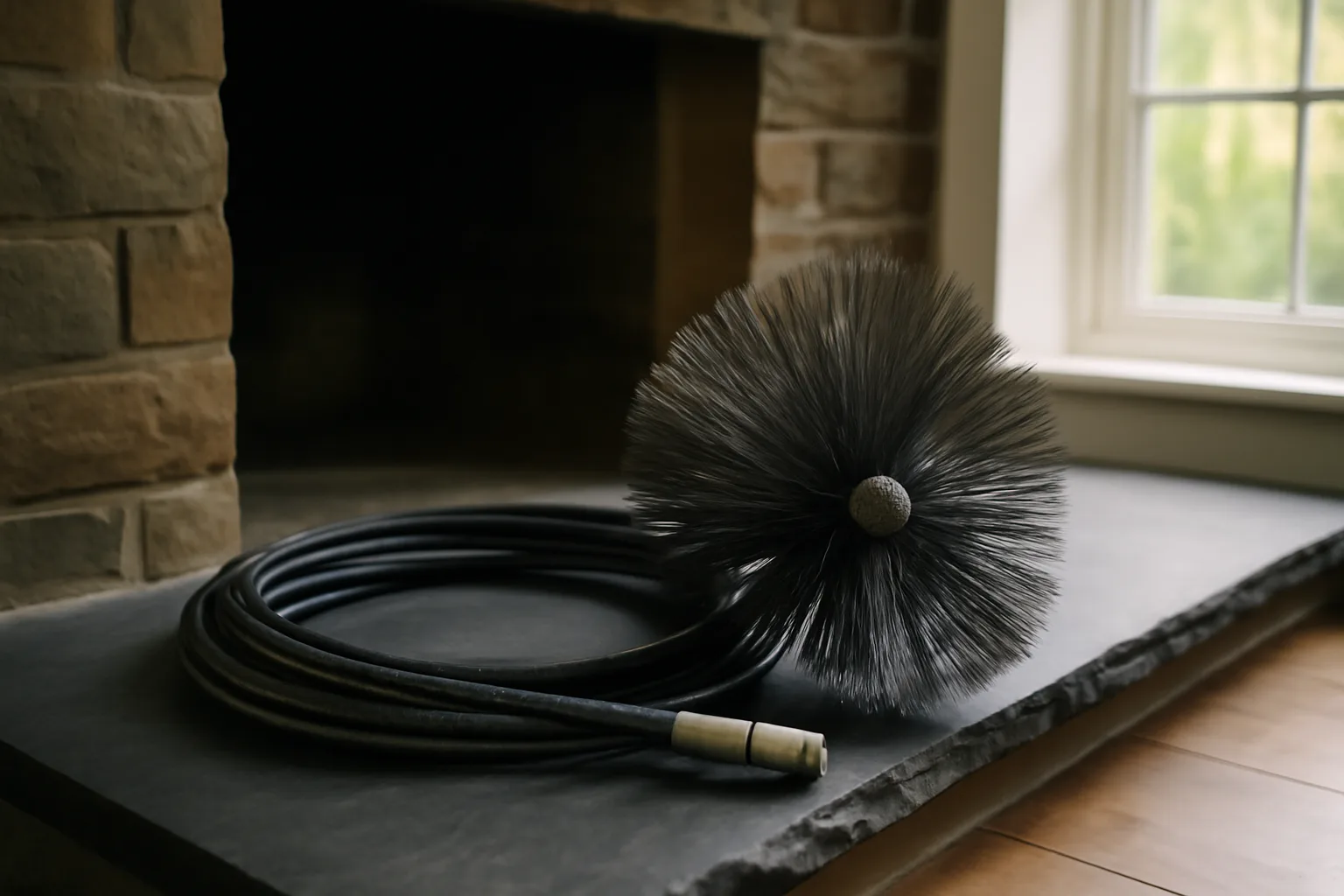
Heat from a chimney fire, or just decades of use, cracks the clay tiles lining a Philadelphia flue, and a damaged liner has to be replaced before the fireplace is used again. We confirm the reline is actually needed, size it right, insulate it to code, and leave you with a flue that is safe to use again. Older Philadelphia masonry chimneys settle over the years, opening joints between clay tiles that a continuous stainless liner closes for good. If your existing liner is sound, we will tell you, because relining is a real expense and we only recommend it when the flue genuinely requires it. Get us at 215-318-4525 for stainless and cast-in-place liner installation.
- Camera-verified need
- UL-listed stainless liners
- Flexible and cast-in-place
- Insulated and code-compliant
- Appliance-sized for gas or wood
The Point Of Treating This Seriously and Then Some
A flue's safety comes down to its liner, the inner surface that contains the burn. We reline with a properly sized stainless liner and confirm the system vents safely before sign-off. You see the camera scan that justifies the reline, so the recommendation is backed by evidence, not pressure. It is the difference an experienced crew actually makes.
Nothing ages a Philadelphia chimney faster than the wet-then-frozen cycle of a PA winter. Trapped water freezes inside the masonry and expands with enough force to split brick and crack a crown. What began as a hairline crack widens into an open joint, then into water reaching the flue itself. Find and stop the water now, and the same chimney serves the house for another generation.
A liner is what separates the fire from your home, inside the flue. We match liner type and diameter to the appliance, install it insulated and code-compliant, and document it. We explain why the reline is needed in plain terms and show you the failure on screen. That is the standard we bring to every Philadelphia chimney.
How We Carry Out The Work Plain and Simple
The liner is the inner pipe that routes smoke safely and keeps heat off the masonry. A new liner is sized to the appliance, insulated to hold draft temperature, and verified to vent correctly. We size the liner correctly the first time, because an oversized or undersized liner causes its own problems. We treat your chimney the way we would treat our own.
Our process is built to be clean, clear, and complete. You reach a person who understands chimneys, we book a time that suits you, and we come ready to work. The living space gets protected, the work gets done and documented, and you get a clear walk-through at the end. You see each step coming, from the first call to the final photo.
The liner is what stands between the fire and the surrounding structure. A continuous stainless liner closes the joints that opened between old clay tiles, top to bottom. The install ends with a camera check showing the liner seated continuously from the firebox to the cap. We hold the work to that standard whether anyone is watching or not.
The Local Knowledge In These Older Homes the Right Way in Philadelphia
The chimneys of Philadelphia are the chimneys we have spent years learning. The chimneys here tend to be old, hard-working, and overdue for attention. We treat that age with respect, repointing and repairing in ways that match the original work rather than tearing into a sound old stack. That experience keeps the quote honest and the work efficient.
Inside the masonry, the liner is the channel that carries heat and gases up and out. Stainless steel is the modern relining standard: a single continuous tube with no joints to open and no tiles to crack. You get a flue that is provably safe to use again, with footage of the finished liner top to bottom. That is the standard we bring to every Philadelphia chimney.
Why It Matters To The Repair Done Properly
Strip away the masonry talk and chimney maintenance is, at bottom, fire safety. Glazed creosote ignites at temperatures a normal fire reaches, and a gap in the liner gives that heat a path to the framing. None of these are visible from the living room, and all of them are exactly what a proper inspection is meant to catch. None of it is abstract; these incidents happen every winter somewhere nearby.
Few trades are as easy to game as chimney work, because the customer cannot see what the sweep claims to find. Coupon outfits lead with a cheap sweep and make their money on repairs nobody confirmed were needed. We would rather under-recommend and keep your trust than over-sell and lose it. We are happy to talk you out of work you do not need, because that is what keeps you calling us.
The liner is what stands between the fire and the surrounding structure. A new liner is sized to the appliance, insulated to hold draft temperature, and verified to vent correctly. We match the liner material to your appliance and local conditions, so it lasts rather than corroding early. That is just how we run every Philadelphia service call.
Where the services overlap
A chimney is a system, so chimney liner installation rarely stands alone — it connects to chimney sweep, chimney safety inspection, chimney leak repair, spark arrestor cap, chimney crown repair, and our crew handles all of it under one roof. We bring the same service to and everywhere else across the area.
If you searched for chimney sweep near me, Whatever your chimney needs, an honest local outfit answers, and the job gets done right. Call 215-318-4525 any time, read Why Your Philadelphia Fireplace Smokes Back Into the Room on our blog, or head back to our Philadelphia home page.